CPVC Pipes for Hot & Cold Water
Every building needs a reliable plumbing system, but many property owners face common problems like rust, scaling, and hidden water leakage. Old metal pipes often suffer from low water flow and get damaged easily by hot water. Weak joints lead to frequent repairs, damaged walls, and high maintenance costs. If the plumbing material is poor, it can ruin the entire water supply system of a house or building.
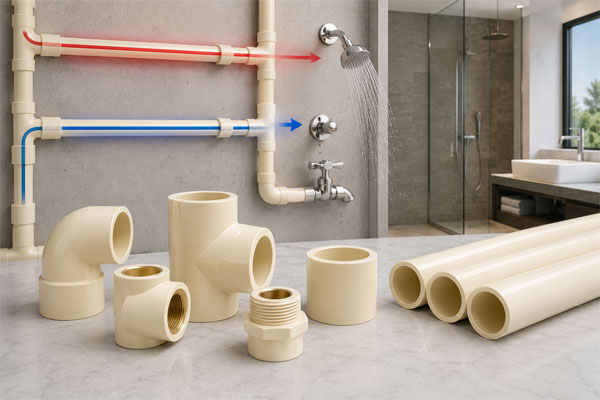
To solve these everyday plumbing issues, CPVC Pipe & Fittings offer the perfect solution. They are specially designed to handle both high temperatures and daily water pressure without rusting or breaking. By using the right CPVC Pipe & Fittings, homeowners, builders, and plumbers can create a safe, strong, and long-lasting hot and cold water supply system for residential, commercial, and industrial use. They ensure clean water flows smoothly without any leaks for years to come.
When plumbers and builders design a water system, they need a material that will not melt or weaken when hot water flows through it. CPVC is designed with special heat resistance, making it safe for boiling hot water lines from geysers and heaters.
Common Problems in Traditional Plumbing Systems
Older plumbing materials, especially metal, bring many headaches to building owners. Here are the most common problems:
- Rust in metal pipes that makes water dirty.
- Scaling inside pipes that blocks the water path.
- Leakage from weak joints that ruins paint and walls.
- Low water pressure due to internal blockages.
- Hot water damage that weakens standard plastic pipes.
- Heavy pipe handling that slows down construction work.
- Difficult installation requiring special welding tools.
- Frequent repairs that cost a lot of money.
- Water discoloration due to pipe corrosion.
- Higher maintenance cost over the building’s life.
- Poor fitting selection leading to dripping pipes.
How CPVC Pipe & Fittings Solve These Plumbing Problems
Switching to a modern CPVC plumbing system eliminates these old problems easily.
- Corrosion-resistant material: They never rust, keeping drinking water safe and clear.
- Better hot water handling: They do not melt or lose shape under hot water.
- Smooth inner surface: Water glides through easily, solving low pressure issues.
- Proper solvent cement jointing: The chemical bond melts the pipe and fitting together, preventing drips.
- Strong fitting connection: The joints become the strongest part of the pipeline.
- Lower chance of scaling: Minerals from water do not stick to the smooth plastic.
- Lightweight and easy to carry: Plumbers can transport and cut them easily.
- Faster installation: No heavy machinery or heat welding is required.
- Cleaner plumbing layout: They look neat and fit perfectly inside walls.
- Less repair when installed correctly: A properly installed system rarely needs fixing.
- Better long-term value: You save money on repairs and replacements.
Main Benefits of CPVC Pipe & Fittings
- Suitable for hot and cold water without losing strength.
- Rust-free and corrosion-resistant for clean water supply.
- Smooth water flow for excellent tap pressure.
- Lightweight design makes transport and handling easy.
- Easy installation saves labor time and cost.
- Good strength to handle daily municipal water pressure.
- Low maintenance, giving property owners peace of mind.
- Leak-proof joints with proper installation and cement.
- Long service life that matches the lifespan of the building.
- Clean and neat plumbing finish behind walls or in shafts.
- Useful for residential and commercial projects alike.
- Cost-effective over time compared to repairing metal pipes.
CPVC Pipe & Fittings vs UPVC Pipes
| Point | UPVC Pipes | CPVC Pipes & Fittings |
|---|---|---|
| Main Use | Cold water supply | Hot and cold water supply |
| Hot Water Suitability | Not recommended for hot water | Highly suitable for hot water |
| Cold Water Supply | Excellent | Excellent |
| Plumbing Use | General cold water pipelines | Internal bathroom and kitchen pipelines |
| Material Behaviour | Rigid, strong and corrosion-resistant | Strong, durable and heat-resistant |
| Common Applications | Borewells and main cold water supply lines | Geysers, showers, washbasins and indoor plumbing |
| Installation | Joined using UPVC solvent cement | Joined using CPVC-specific solvent cement |
| Maintenance | Low maintenance | Low maintenance |
| Best Use | Outdoor and cold water applications | Indoor hot and cold water pipelines |
How to Choose the Right CPVC Pipe & Fittings
- Check hot or cold water requirement before buying.
- Choose the correct pipe size for your desired water flow.
- Select proper fittings (elbows, tees, unions) for your layout.
- Check the pressure requirement of your building.
- Check the temperature requirement for geyser connections.
- Use proper solvent cement made specifically for CPVC.
- Check compatibility with other plumbing materials using adaptors.
- Plan the pipe routing properly to use fewer fittings.
- Use a skilled plumber who knows how to handle CPVC.
- Choose a trusted supplier for genuine materials.
- Confirm product quality before installation.
- Plan future maintenance access by adding unions and valves.
Final Thoughts on CPVC Pipe & Fittings
A building is only as strong as its plumbing. CPVC Pipe & Fittings are widely considered the most practical and reliable option for hot and cold water supply. Because they are rust-free, easy to install, and require low maintenance, they are perfectly suitable for modern plumbing systems in homes, hotels, and hospitals. If you are planning a new plumbing project or renovating an old one, reach out to Universal Plastic Agency for expert advice and top-quality plumbing materials.
FAQs
CPVC Pipe & Fittings are durable plastic plumbing materials made from Chlorinated Polyvinyl Chloride. They are used to transport water safely and securely in residential and commercial buildings.
Yes, they are specially designed to handle high temperatures. This makes them the best choice for geyser lines, hot showers, and industrial hot water utilities.
Absolutely. CPVC is excellent for both hot and cold water, allowing plumbers to use one single pipe type for the entire bathroom or kitchen.
UPVC is used only for cold water supply, while CPVC is treated to handle both hot and cold water safely without melting or losing strength.
Yes, because they are made of strong plastic, CPVC pipes and fittings will never rust, corrode, or scale like old metal pipes.
Common fittings include elbows for turning, tees for dividing water, couplers for joining, reducers for changing sizes, and adaptors for connecting to taps.
Pipe size depends on your water flow needs. Standard homes use 1/2 inch or 3/4 inch pipes for internal bathrooms, and 1 inch or larger for main water tank lines.
Joints usually leak if the pipe is not pushed in fully, if the wrong solvent cement is used, or if the pipe was cut crookedly during installation.
Yes, they are highly recommended for hotels, hospitals, schools, and offices because they are low maintenance and ensure clean water delivery.
Universal Plastic Agency is a trusted supplier in Ahmedabad, Gujarat, offering a wide range of CPVC, UPVC, and HDPE pipes for all plumbing needs.