Early Warning Signs That a Welding Hose Needs Replacement
A Welding Hose carries oxygen or fuel gas between cylinders, regulators and the torch. In busy workshops it may be dragged across floors, bent around machines and exposed to sparks, heat, dust and rough handling. Over time, these conditions can affect the hose surface, flexibility and fittings.
For fabrication shops and industrial plants, regular inspection is important. Replacing a worn hose at the right time can help reduce gas leakage, unexpected downtime and unsafe working conditions.
Why Welding Hose Condition Matters
A welding hose is part of the gas delivery system, not just a flexible pipe. Cracks, weak areas or loose connections can affect gas flow and reliability.
A simple inspection routine helps operators notice damage early and also helps purchasing teams plan replacements before a hose becomes unusable. This is especially useful in fabrication units where welding equipment is used regularly throughout the day.
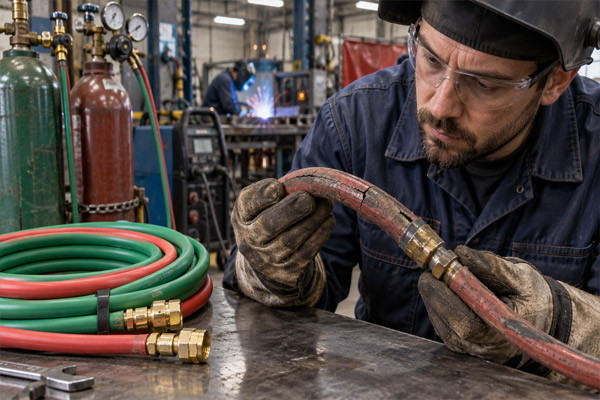
Visible Cracks Cuts and Burn Marks
Hose Hardening Softening or Bulging
Gas Leakage or Unstable Flow
Check the Fittings and Connection Points
Areas near fittings often experience repeated bending. Check for cracking, looseness or deformation where the hose meets the connector.
Connections should remain secure and suitable for the gas line. Regular inspection around these areas can help identify wear before it affects normal welding operations.
Storage Conditions Can Affect Hose Life
Poor storage can shorten hose life. Keep welding hoses away from excessive heat, sharp metal edges, vehicle movement and materials that may damage the hose surface.
After use, store the hose without tight bends or heavy objects on it. Good routing helps reduce abrasion, crushing and kinking.
For workshops that use several welding stations, organized hose storage can also make daily inspection and handling easier.
Repair or Replace a Damaged Welding Hose
Temporary tape or improvised repairs should not be treated as a long term solution for a hose carrying welding gases. Where the hose body has deep damage or its condition is uncertain, replacement is usually the better option.
Frequent damage may also point to poor routing or handling. Review sharp edges, excessive bending and floor traffic before fitting the replacement.
This helps buyers solve the cause of repeated hose damage instead of simply replacing the same product again.
How to Choose the Right Replacement
Before ordering, confirm the gas application, hose diameter, required length, working pressure, connection type, quantity and operating environment. These details help the supplier recommend a more suitable product.
For oxygen and fuel gas systems, buyers may choose red blue welding hose options for easier line identification.
Industrial buyers in Ahmedabad and Gujarat should also consider product availability, technical information and repeat supply support when selecting a supplier.
Universal Plastic Agency supplies welding hose solutions for fabrication, metalworking, repair and industrial applications. Customers across Gujarat and India can discuss their operating requirements before selecting the appropriate hose.
Conclusion
A welding hose should be replaced when cracks, cuts, burns, bulging, hardening, fitting damage or suspected leakage make its condition unreliable. Waiting for complete failure can increase downtime and create unnecessary risk.
Regular checks, good storage and timely replacement help support safer and more dependable welding operations. When buying a new hose, focus on correct application, pressure requirement, size, construction and supplier support rather than price alone.
Frequently Asked Questions
A welding hose should be visually checked before regular use and whenever damage, leakage or unusual gas flow is suspected.
Deep cracks, cuts, burns, exposed reinforcement, bulging, material hardening, damaged fittings and suspected leaks are common warning signs.
Tape should not be treated as a permanent repair for a gas carrying welding hose. Damaged hoses should be assessed and replaced when required.
Heat, ageing, environmental exposure and storage conditions can reduce flexibility and make the hose brittle.
Share the gas application, hose diameter, length, working pressure, connection details, quantity and operating conditions.
Choose a supplier that offers suitable hose sizes, application guidance, product availability and dependable industrial supply support in Ahmedabad and Gujarat.
Red and blue hose arrangements are commonly used to make oxygen and fuel gas lines easier to identify. The selected hose must still match the required gas and operating conditions.