How to Choose the Right Welding Hose for Industrial Applications
Welding work needs a safe and controlled flow of oxygen and fuel gas. A quality Welding Hose connects the gas cylinder, regulator, and torch while allowing the operator to move freely. It is widely used in fabrication shops, repair garages, construction sites, metal plants, shipyards, and maintenance units.
Choosing the right hose is important because welding gases travel under pressure. A damaged or unsuitable hose may leak, crack, become hard, or fail during use. Buyers should check gas compatibility, pressure rating, size, flexibility, reinforcement, and product markings before ordering.
What Is a Welding Hose
A Welding Hose is a flexible tube made to carry oxygen, acetylene, LPG, or another approved fuel gas from the supply source to a welding or cutting torch. It generally has an inner tube, reinforcing layer, and outer cover.
The inner tube must resist the gas passing through it. The reinforcement helps the hose handle pressure without expanding or bursting. The outer cover protects it from abrasion, sparks, heat, weather, and regular workshop movement.
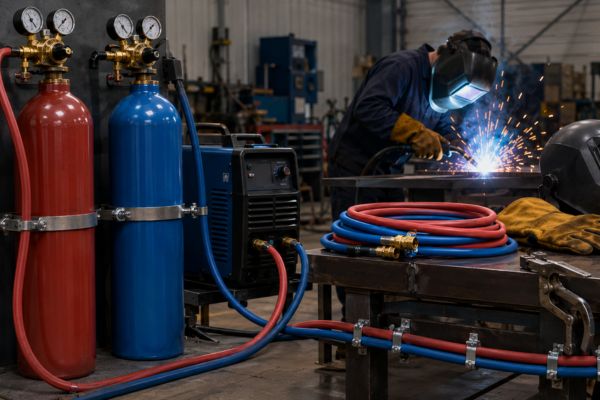
Welding hoses are available as single hoses and twin hoses. A twin hose keeps the oxygen and fuel gas lines together, making handling easier and reducing tangling.
Common Uses of Welding Hose
Welding hoses are commonly used for:
- Gas welding and brazing
- Oxy-fuel cutting
- Structural steel fabrication
- Automobile body repair
- Machinery maintenance
- Pipeline repair
- Shipbuilding
- HVAC and refrigeration work
- Construction projects
The correct hose depends on the gas, working pressure, temperature, movement, and site conditions. A hose designed for one gas should not be used for another unless its specifications clearly allow it.
Important Features of a Quality Welding Hose
A dependable hose should provide safety, strength, and easy handling.
How to Choose the Right Welding Hose
First, identify the gas that will pass through the hose. Oxygen and fuel gases may require different hose materials. The manufacturer should clearly mention the approved gas type in the product details.
Next, check the working pressure. The hose pressure rating must match the regulator, torch, and application. Never select a hose only based on its appearance or low price.
Confirm the inner diameter and required length. The correct bore supports proper gas flow, while a practical length allows enough operator movement. A hose that is unnecessarily long may cause pressure loss, tangling, and storage problems.
Buyers should also review the following details:
- Temperature resistance
- Minimum bend radius
- Hose wall thickness
- Suitable fitting type
- Burst pressure
- Available test reports
- Outdoor weather resistance
- Resistance to oil and abrasion
For outdoor welding work, consider sunlight, rain, moisture, heat, and rough working surfaces before selecting the product.
How to Select a Welding Hose Manufacturer
A reliable Welding Hose Manufacturer should provide complete and easy-to-understand technical information. The product details should include hose size, gas compatibility, pressure rating, construction, temperature range, and recommended applications.
The manufacturer should follow controlled production and testing procedures. Raw materials, reinforcement, dimensions, surface finish, and pressure performance should be inspected to maintain consistent product quality.
Industrial buyers may also require customised hose lengths, colour combinations, packaging, private labelling, or regular bulk supply. An experienced manufacturer should explain which customisation options are technically safe and commercially practical.
Before placing a bulk order, buyers should request:
- Product samples
- Technical specification sheets
- Pressure testing information
- Available quality certificates
- Minimum order quantity
- Production and dispatch time
- Packaging details
- After-sales support
These checks make it easier to compare manufacturers and reduce the possibility of ordering an unsuitable welding hose.
Welding Hose Safety and Maintenance
Inspect the hose before every use. Check for cuts, burns, cracks, bubbles, soft areas, exposed reinforcement, damaged fittings, or signs of gas leakage. A damaged hose should be removed from service immediately.
Keep welding hoses away from hot metal, sharp edges, moving vehicles, oil, grease, and electrical cables. Do not pull welding equipment using the hose. Heavy objects should not be placed over it, and the hose should not be forced into tight bends.
Store the hose in a clean, dry, and ventilated area. Coil it loosely without twisting. Protect it from direct sunlight, chemicals, moisture, and extreme heat.
The hose connections should be inspected by trained workers using suitable fittings and approved leak-testing methods. Replacement should follow the recommendations of the manufacturer and the workplace safety team.
Why Welding Hose Quality Matters
A low-cost hose may reduce the initial purchase expense, but early cracking, leakage, stiffness, or pressure failure can increase downtime and replacement costs. Poor hose performance may also disturb the gas flow and reduce operator confidence.
A quality Welding Hose offers better flexibility, pressure stability, abrasion resistance, and service life when used correctly. For factories, workshops, contractors, distributors, and industrial projects, choosing the right hose supports safer operations, steady productivity, and lower long-term maintenance costs.
Frequently Asked Questions For UPVC fittings
A welding hose carries oxygen or fuel gas from a cylinder or gas supply system to a welding, brazing, or cutting torch.
No. Only use a hose that is specifically designed and marked for the selected gas.
A twin welding hose combines separate oxygen and fuel gas lines in one joined construction. It makes handling easier and reduces tangling.
Select the inner diameter, pressure rating, and length according to the gas flow, equipment requirements, and working distance.
It should be visually inspected before every use and included in regular workplace safety inspections.
Replace the hose if you notice cracks, cuts, burns, leaks, swelling, hardening, exposed reinforcement, or damaged fittings.
Ask about gas compatibility, pressure rating, hose construction, testing, size options, customisation, delivery time, certificates, and technical support.
Yes. Select a hose suitable for outdoor use and protect it from sunlight, weather, sharp surfaces, chemicals, and excessive heat.