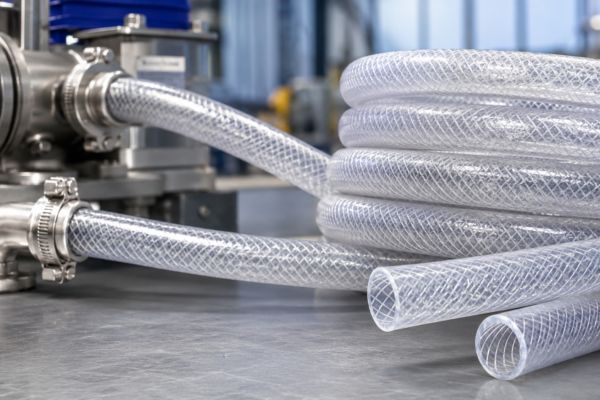
Everything You Need to Know About PVC Braided Hoses
A PVC braided hose is a flexible tube made from polyvinyl chloride and reinforced with textile yarn. The braided layer helps it handle pressure, bending, and movement better than a plain PVC tube. It is widely used for water, air, irrigation, pneumatic tools, construction, agriculture, workshops, and general industrial fluid transfer.
Buyers choose this hose because it is lightweight, easy to install, corrosion-resistant, and available in many sizes. However, the right product must match the fluid, pressure, temperature, diameter, and safety standards. This guide explains its uses, benefits, selection points, and how to choose a reliable braided hose manufacturer or braided hose supplier.
What Is a PVC Braided Hose?
A PVC braided hose usually has three layers. The inner layer carries the fluid. The middle layer contains braided polyester or textile yarn for reinforcement. The outer PVC layer protects the hose from moisture, rubbing, dust, and normal outdoor exposure.
The reinforcement controls expansion when pressure builds inside the hose. It also improves flexibility and helps the hose maintain its shape. Transparent options make it easier to see liquid flow, air bubbles, deposits, or blockages.
Pressure capacity changes with hose size, wall thickness, material quality, temperature, and construction. Always check the technical data sheet instead of choosing a hose only by colour or appearance.
Common PVC Braided Hose Applications
PVC braided hose is used in household, agricultural, commercial, and industrial settings. Common applications include:
- Water supply and discharge
- Gardening and irrigation
- Air lines and pneumatic tools
- Construction site water transfer
- Car washing and service stations
- Machine coolant circulation
- Workshop compressors
- Light-duty chemical transfer
- Laboratory and utility connections
- Food transfer when properly certified
Standard PVC may not be suitable for strong solvents, concentrated chemicals, fuels, oils, or very hot liquids. Chemical compatibility should always be confirmed before use.
Main Benefits of PVC Braided Hose
How to Select the Right PVC Braided Hose
How to Choose a Braided Hose Manufacturer
A dependable braided hose manufacturer should provide clear technical data, consistent quality, and application guidance. Ask for pressure ratings, temperature limits, dimensional tolerances, available sizes, and test certificates.
For bulk orders, request samples and test them under actual operating conditions. Uneven walls, loose braiding, weak bonding, or poor raw materials may cause leakage and early failure. Ask how the hose is tested for pressure, flexibility, dimensions, and visible defects.
An experienced manufacturer should also help buyers select the right hose based on the application. This is especially important when the hose will carry chemicals, compressed air, drinking water, or food products.
How to Evaluate a Braided Hose Supplier
A reliable braided hose supplier should understand the application instead of offering only the cheapest option. Share details such as fluid type, pressure, temperature, size, fittings, quantity, and working environment.
Compare quotations by specification and quality, not only price per metre. Check stock availability, dispatch time, packaging, replacement policy, batch consistency, and technical support. Stable inventory can help reduce downtime and purchasing delays.
A trustworthy supplier should provide correct product information and avoid recommending a standard hose for an application that needs special certification or chemical resistance.
PVC Braided Hose Installation and Maintenance Tips
Cut the hose cleanly and use fittings that match its diameter. Secure connections with suitable clamps. Avoid sharp edges, twisting, hot surfaces, moving machine parts, and severe abrasion.
Do not bend the hose too tightly because this can reduce flow and damage the reinforcement. Make sure the hose has enough space to move during pressure changes or machine operation.
Inspect the hose regularly for cracks, swelling, hardening, leakage, loose fittings, or exposed reinforcement. Replace damaged hose immediately. Store unused rolls away from direct sunlight, heat, chemicals, moisture, and heavy objects.
Conclusion
PVC braided hose is a practical choice for water, air, irrigation, pneumatic, and general fluid-transfer applications. Its reinforced structure provides useful pressure resistance while keeping the hose light and flexible.
The best results come from matching the hose with the actual fluid, pressure, temperature, size, and working environment. A capable braided hose manufacturer can provide technical guidance, while a reliable braided hose supplier can support consistent quality, proper documentation, and timely delivery.
Frequently Asked Questions For UPVC fittings
PVC braided hose is commonly used for water, compressed air, irrigation, gardening, coolant circulation, construction, car washing, and general industrial fluid transfer.
It can be used for drinking water only when the braided hose manufacturer provides the required potable-water or food-contact certification.
It can handle some light chemicals, but suitability depends on the chemical type, concentration, operating temperature, and hose material. Always confirm chemical compatibility before use.
Match the inner diameter with the required fluid flow and fitting size. Also check the outer diameter to select suitable clamps and confirm installation space.
Certain grades can carry compressed air. Confirm the working pressure, temperature rating, reinforcement quality, and safety requirements before installation.
Ask for the pressure rating, temperature range, dimensions, chemical compatibility, certifications, sample availability, delivery time, packaging, and replacement terms.
Working pressure is the safe pressure recommended for regular use. Burst pressure is the pressure level at which the hose may fail during testing. Burst pressure should never be treated as normal working pressure.
Its service life depends on operating pressure, temperature, chemical exposure, sunlight, bending, abrasion, installation quality, and regular maintenance.