How Can the Right Hose Support a Water Reuse System?
PVC braided hose can connect equipment in suitable factory water circuits, including some cooling and water reuse arrangements. The right choice depends on the water being carried, the operating conditions and the way the hose is installed.
Think about a machine that uses water for cooling throughout the day. Once that water has absorbed heat, where does it go? In a suitable recirculation system, it returns for cooling and treatment before going back into service.
For factories reviewing water use in 2026, these everyday connections deserve attention. A properly selected hose supports the circuit, while good system design determines how much water can be recovered. Looking at both together gives your team a more useful starting point for improvement.
Choose a Hose That Fits Your Daily Operations
The right PVC braided hose should match the job it performs in your factory. Supplying water to a machine, carrying warm return water and transferring treated water can place different demands on the connection.
Think about what the hose will experience during a normal working day. How much water needs to pass through it? How warm does the water become? Will the connection operate under pressure or suction?
These details help narrow down a suitable specification.
| Water Connection | What Matters When Choosing the Hose |
|---|---|
| Machine water supply | Required flow and operating pressure |
| Warm water return | Water temperature and the pressure rating at that temperature |
| Treated water transfer | Compatibility with remaining chemicals and additives |
| Pump inlet | Confirmed suitability for the suction conditions |
Share this information with your supplier, along with the required diameter, length and fitting details. A clear description of the application makes product recommendations and quotations more useful.
Reused Water Can Be a Different Mixture
Water can change as it moves through a factory. It may collect process residues or contain treatment chemicals, coolant additives or traces of oil.
That means a hose suitable for the incoming water needs another compatibility check before it carries the recovered stream.
Your water analysis and chemical information help the supplier assess the actual mixture. Include anything added during treatment or cleaning, along with the relevant concentration and temperature.
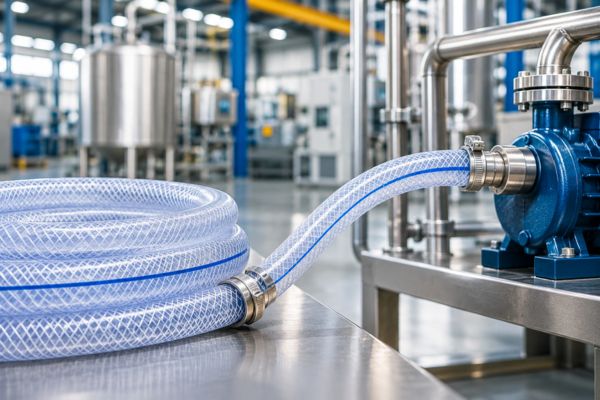
A transparent hose can make visible deposits or changes in flow easier to notice. Water quality testing provides the information needed to decide whether the recovered water suits its next use.
Warm Return Water Deserves a Closer Look
A pressure rating makes sense only alongside its stated conditions. Universal Plastic Agency’s braided hose chart, for example, lists working pressure at 30°C.
If your return water runs warmer, that reference point becomes part of the buying discussion. Ask which working pressure applies at your actual operating temperature.
Think about the full working day too. Start-up, cleaning and changes in production can bring different conditions from those seen during a quick inspection.
Give the supplier the expected temperature range and pressure fluctuations. Include the fittings in the review so the whole connection suits the job.
Give Water a Clear Route
Water needs an adequately sized, practical route between pieces of equipment. Extra hose length, tight bends and narrow connections can add resistance and affect the flow reaching the machine.
The internal diameter should suit the required flow, connection length and acceptable pressure loss. Copying an old hose size works best when your team knows the existing arrangement delivers what the equipment needs.
Look at the route during maintenance discussions. Could a hose be rubbing against an edge? Is there enough room for the specified bend radius? Can nearby equipment be serviced without pulling on the connection?
A clear layout helps your supplier recommend suitable dimensions and helps your team install the hose correctly.
Make Connections Easy for Your Team to Recognise
A well-planned water circuit should be easy to understand during a busy shift or maintenance job.
Label hoses by service and destination so staff can distinguish fresh water, cooling water and recovered process water. Colour coding can help when everyone understands the same system.
Keep those details on the equipment drawing or maintenance record. When a water source, route or operating duty changes, update the information with it.
The next person replacing a hose should be able to identify where it belongs and which specification applies. Clear records make that handover easier.
Look at the Water Meter as Well as the Hose
A water reuse project needs measured results. Record how much fresh water enters the circuit, how much returns for reuse and where losses occur.
Compare similar operating conditions. A busy production day will usually tell a different story from a shorter shift, so water use per batch or operating hour can be a more useful comparison.
Remember to include replacement water needed during normal operation, draining or treatment.
Reliable hose connections help keep the circuit intact and limit avoidable leakage. The actual savings come from the performance of the complete system. Keeping clear records lets your team see which changes have made a difference.
Make Your Enquiry Useful from the Start
Universal Plastic Agency supplies braided hoses and industrial piping products from Ahmedabad, Gujarat. Buyers in Ahmedabad, across Gujarat and elsewhere in India can discuss their application and supply requirements with the team.
A useful enquiry explains what the connection needs to do. Send the water source and composition, required flow, pressure, temperature, hose dimensions and fitting details. A circuit sketch can bring those details together.
Also mention the quantity, delivery location and required schedule. Ask about the proposed product reference, technical information, available lengths and fitting options.
Keep the agreed specification for future orders so replacements can be checked against the same duty.
Conclusion
Choosing PVC braided hose becomes easier when you understand the water circuit around it. The water mixture, temperature, pressure and installation route all help define a suitable connection.
If your factory is planning a water reuse project or reviewing existing connections, share the details with Universal Plastic Agency. Discuss the proposed specification and available product options before placing a trial or bulk order.
Frequently Asked Questions
Choose a grade matched to the recovered water’s composition, pressure and temperature. Send the supplier your water analysis, operating details and connection layout to discuss a suitable product.
Use the existing size as a reference, then check whether it provides the required flow. Changes to equipment, hose length or operating conditions may call for a fresh sizing review.
Check the exact product’s vacuum suitability before ordering. A pressure rating does not establish suction performance. Your supplier may suggest a different hose construction for the pump inlet.
It may, provided the selected specification meets both duties. Compare the temperature, pressure and water composition at each connection before ordering the same product for both positions.
Ask Universal Plastic Agency about samples, cut lengths and minimum quantities for your selected product. Agree the trial requirements before assessing the connection under controlled operating conditions.
Discuss them together so dimensions, materials and attachment methods suit the complete connection. Confirm whether the quotation includes loose components or an assembled hose with fittings.
Send the required specification, total quantity, preferred lengths, fittings, delivery location and schedule. Ask for confirmation of the proposed product, availability, documentation and dispatch arrangements before ordering.